


Ever wondered why some videos keep you glued to the screen while others lose your attention within seconds? It’s not always about the camera quality or the script it’s often the editing that makes or breaks the experience. Great video editing goes beyond seamless cuts or flashy transitions. It’s rooted in psychology: understanding how the human brain processes visuals, reacts to pacing, and connects emotionally to storytelling.
Every cut, sound cue, and visual rhythm serves a psychological purpose. Editors shape not only what we see, but how we feel about what we see. They manipulate time, guide our attention, and control tension and release all to keep viewers engaged. Whether it’s maintaining eye-tracking through continuity editing or using jump cuts to jolt our attention, these decisions tap into cognitive and emotional responses that have been hardwired into us.
In this guide, we’ll dive into the fascinating intersection of video editing and psychology. You’ll discover why some editing techniques captivate viewers, how pacing impacts emotional response, and what editing patterns enhance memory retention. By understanding the why behind each editing choice, you’ll be better equipped to craft compelling videos that resonate, retain attention, and drive action.
Why Pacing Matters More Than You Think

Pacing is one of the most powerful yet underrated elements of video editing. It refers to the rhythm and speed at which scenes unfold how quickly cuts happen, how long shots are held, and how movement flows from one frame to the next. More than just a stylistic choice, pacing directly affects how viewers emotionally and cognitively respond to what they’re watching.
A snappy edit with quick cuts can generate excitement, create urgency, and elevate energy. It’s perfect for high-tempo content such as action sequences, comedic moments, or promotional videos where engagement needs to happen fast. On the other hand, slower pacing allows viewers to process information, build emotional connection, and absorb narrative detail. This approach works best for documentaries, interviews, testimonials, or emotionally driven stories.
- Fast pacing keeps adrenaline high and attention sharp. It’s often used in YouTube content, trailers, and highlight reels to maintain a sense of urgency and movement.
- Slow pacing fosters reflection, intimacy, and emotional depth. It gives weight to dialogue, pauses for emotional impact, and builds tension deliberately.
- Strategic pacing shifts such as starting fast, slowing down for a serious moment, then speeding up again can re-engage the viewer’s brain. These shifts break monotony and create contrast, which is vital for maintaining attention across longer videos.
From a psychological standpoint, our brains are wired to respond to patterns and changes. If a video stays at the same pace throughout, especially if it’s mismatched to the content, it can lead to cognitive fatigue. Too fast, and viewers feel overwhelmed. Too slow, and they may tune out. But when pacing aligns naturally with the message and emotional tone of the content, it keeps the brain actively engaged and emotionally invested.
So, whether you’re editing a high-energy ad or a heartfelt story, always consider how your pacing rhythm influences not just the flow but the viewer’s psychological journey.
The Role of Cuts and Transitions
Cuts and transitions are more than just ways to move from one shot to another they’re tools that shape the viewer’s perception, emotion, and attention. Every editing decision subtly guides how we interpret what’s happening on screen. Jump cuts, cross-dissolves, fades, and match cuts each serve a different purpose in storytelling, and each one sends a different psychological signal to the viewer.
- Hard cuts (straight cuts) are abrupt transitions that quickly move from one shot to the next without any buffer. They’re used to compress time, increase pace, or create shock and immediacy. These cuts tell the brain: Pay attention something new is happening.
- Jump cuts deliberately break continuity to indicate the passage of time or a sudden change in thought. Widely used in vlogs or stylised content, they energise the viewer by eliminating filler, but too many in succession can be jarring if not intentional.
- Cross-dissolves and fades are softer transitions. They suggest a lapse in time, a memory, or emotional reflection. These transitions slow the tempo and create a more contemplative tone, allowing the viewer’s brain to “breathe.”
- Match cuts are elegant transitions that link similar shapes, movements, or objects between two shots like a spinning coin transitioning into a turning wheel. This technique creates a sense of visual harmony that is inherently satisfying because the brain is wired to recognise patterns and continuity.
From a psychological perspective, our brains are constantly trying to make sense of what we see. Sudden, unexplained changes disrupt that effort and require mental energy to reorient. That’s why well-timed, purposeful transitions can make video content feel smooth, intentional, and easy to follow. On the other hand, poorly placed or inconsistent cuts can interrupt cognitive flow, causing viewers to feel disoriented or fatigued.
In short, great editors don’t just cut for coverage they cut for clarity and emotion. They understand that transitions are not just technical decisions, but psychological cues that shape how a story is felt and understood.
Music and Emotional Response

Music is one of the most powerful emotional drivers in video editing. It bypasses logic and goes straight to the limbic system the part of the brain that governs emotions, memory, and motivation. That’s why a single piece of music can completely change the tone of a scene. The right track doesn’t just support the visuals it deepens them, triggers emotional reactions, and makes moments unforgettable.
- Upbeat, high-tempo music elevates energy levels. It’s perfect for montages, product reveals, or scenes that need a sense of fun, urgency, or celebration. This kind of music often stimulates dopamine, the brain’s “feel-good” chemical, creating a positive association with the content.
- Soft, ambient music sets a calm and introspective mood. It’s commonly used in interviews, tutorials, or reflective storytelling to reduce viewer anxiety and create space for connection. These tracks often feature slow tempos, sustained notes, and minimal instrumentation.
- Dramatic scores, with escalating rhythms and bold instrumentation, are ideal for building tension, suspense, or awe. Whether it’s an orchestral swell before a product launch or a bass-heavy track during a reveal, these cues heighten anticipation and emotional investment.
But music doesn’t always need to be present to be effective. Silence, when used intentionally, can be just as powerful. A well-timed pause can create emphasis, signal a turning point, or draw the viewer’s attention inward. It allows the audience to sit with a moment, process what they’ve seen, and feel the weight of the narrative. In fact, the sudden absence of music can often speak louder than the most dramatic soundtrack.
Neurologically, music also enhances memory retention. Viewers are more likely to recall scenes paired with emotionally resonant audio. This is why iconic soundtracks from films or campaigns stick with us long after the visuals fade our brain ties the emotional peak to the auditory cue.
Eye-Tracking and Visual Hierarchy
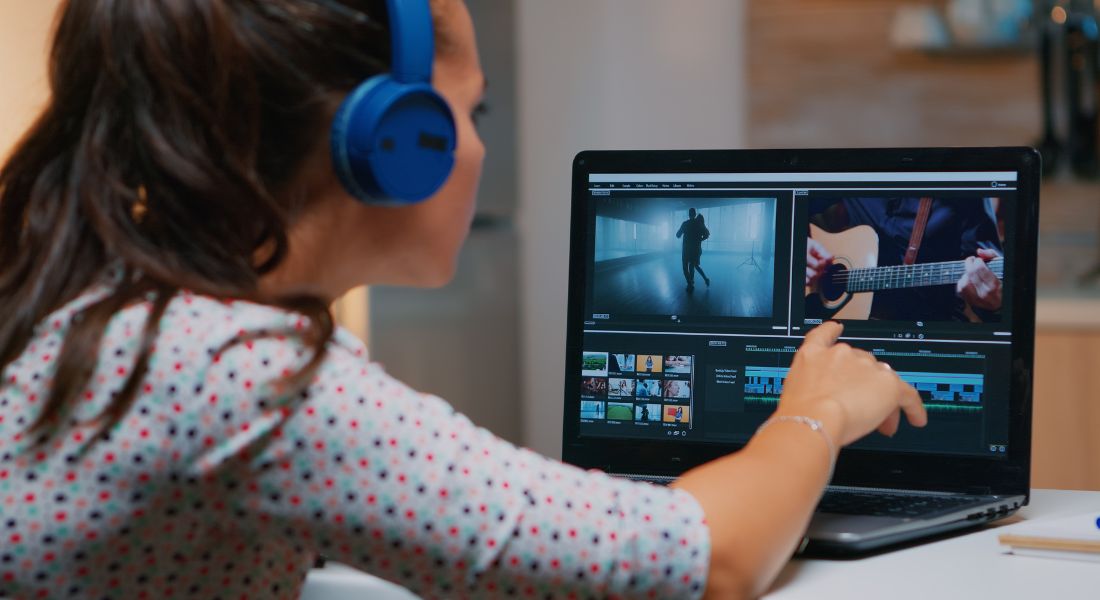
One of the most fascinating aspects of editing is the ability to guide the viewer’s eyes often without them even realising it. Human attention isn’t random. It follows predictable patterns based on motion, contrast, faces, and focal points. Understanding eye-tracking and visual hierarchy allows editors to take control of where the audience looks and how they absorb information.
Studies in neuroscience and behavioural psychology show that the brain is wired to prioritise:
- Motion – Our eyes are instinctively drawn to movement, a trait that evolved for survival. Editors can leverage this by using subtle zooms, pans, or tracking shots to steer focus.
- Faces and eyes – We are hardwired to seek out faces, particularly eyes. Placing a person’s face near the centre of the frame or using close-ups creates a powerful emotional connection and helps hold attention.
- Brightness and contrast – Lighter areas and high-contrast zones attract attention faster than dark, flat spaces. Colour grading and lighting in post-production play a big role in this visual hierarchy.
- Zooms, pans, and camera movements are often used to direct the viewer’s focus within the frame. For example, zooming into a person’s expression during a key emotional moment guides attention and enhances the storytelling.
- Cutting from wide to close shots helps clarify where the viewer should be focusing next, while maintaining narrative momentum and visual clarity.
- Graphic overlays and lower thirds such as names, subtitles, or callouts should be positioned in areas where the viewer’s eye is naturally drawn, usually the lower third of the screen, without obstructing the primary subject. Editors also need to be mindful of not overloading the frame with information, which can split attention and reduce retention.
By tracking where the eye is most likely to go and understanding how people visually scan a screen editors can strategically place important elements like text, product features, or visual cues exactly where they’re most likely to be noticed.
This concept ties directly into message delivery. If the viewer’s attention is guided effectively, the core message of the video lands more clearly and memorably. Poor placement or distracting visuals can dilute the impact, causing viewers to miss key information or disengage altogether.
Pattern Recognition and Viewer Satisfaction
One of the brain’s core functions is pattern recognition. From childhood, we’re wired to seek out and respond to repetition, rhythm, and visual structure it’s how we make sense of the world. In video editing, this cognitive trait is a powerful tool. When editors intentionally use visual patterns, rhythmic structures, and consistent framing, they create content that feels organised, polished, and satisfying to watch.
- Repeating visual motifs such as recurring shots, colour schemes, or camera angles help reinforce themes and build a visual identity throughout a video. These patterns create a sense of unity that the brain subconsciously picks up on. For instance, returning to the same visual framing at the end of a video that was used in the opening creates narrative closure, which is deeply satisfying to the viewer.
- Editing rhythms, like timing cuts to music beats or repeating the same pacing across similar scenes, also tap into this pattern preference. Our brains process rhythm and predictability easily, which makes the viewing experience more fluid and enjoyable. It also reduces cognitive load, freeing mental space for emotional engagement or message absorption.
- Breaking the pattern is just as important. Once a rhythm or structure is established, interrupting it whether through a sudden silence, unexpected cut, or shift in tone can be highly effective. These interruptions jolt the viewer’s attention, re-engage them, or highlight a key moment in the narrative. The contrast makes the shift feel more impactful.
From a visual standpoint, principles like symmetry, the rule of thirds, and balanced composition appeal to our innate desire for harmony and structure. When a shot is well-framed or adheres to familiar visual conventions, the brain finds it easier to process and more pleasurable to view. This isn’t just about aesthetics; it’s about psychological comfort. When everything on screen flows logically and looks purposeful, it signals quality and professionalism.
On the flip side, inconsistent or chaotic editing can create discomfort. If a video lacks cohesion jumping unpredictably in tone, pacing, or structure viewers may feel confused, restless, or mentally fatigued. This often results in higher drop-off rates, as the brain disengages from what it can’t easily follow.
Cognitive Load and Processing Ease
One of the most critical yet often overlooked considerations in video editing is cognitive load: the amount of mental effort required for the viewer to understand what they’re seeing and hearing. The human brain can only process a limited amount of information at one time. When a video overwhelms that capacity with too many visuals, rapid-fire dialogue, clashing audio, or excessive on-screen elements, the result isn’t engagement it’s exhaustion.
Great editors know how to balance clarity with creativity. Every editing choice either reduces or adds to the viewer’s cognitive load.
- Clean, purposeful edits help the brain follow the story without unnecessary mental strain. When each cut feels intentional moving the narrative forward rather than causing confusion the viewer can relax into the experience.
- Clear visuals with good lighting, uncluttered backgrounds, and strong focal points guide the eye efficiently. The brain doesn’t have to waste energy figuring out what it should be focusing on.
- Well-mixed audio ensures that dialogue, music, and sound effects are all balanced. When audio is muddy or too busy, comprehension drops dramatically. Studies show that people retain far less information when sound isn’t clear or when background music drowns out key messages.
Language and pacing also play a big role in processing ease:
- Shorter sentences, natural pauses, and breathing space especially in voiceovers or on-screen text give the brain time to absorb and reflect on information. A constant barrage of speech or text forces the viewer to play mental catch-up, often at the expense of retention.
- Simpler transitions like straight cuts or gentle crossfades often outperform complex ones. While flashy transitions may seem exciting, overusing them can break continuity and distract from the core message. Smooth, minimal transitions reduce friction and keep the story flowing effortlessly.
The psychology behind this is clear: when viewers expend less effort trying to make sense of the format, they can devote more attention to the message. Smart editing removes friction. It makes content feel intuitive, accessible, and engaging especially in educational, corporate, or explainer videos where clarity is key.
Story Arcs and Emotional Investment
At the heart of every memorable video is a well-crafted emotional journey and editing is the invisible hand that shapes that journey. While scripts and visuals provide the content, it’s the editing that determines how and when that content unfolds. By mirroring classic narrative arcs and manipulating pacing, editors can evoke powerful emotional responses and forge a deeper connection between the viewer and the story.
Just like in literature or film, video content benefits from story structure: a beginning that draws viewers in, a middle that builds tension or conflict, and an end that resolves or inspires. Editors bring this arc to life by carefully crafting the rhythm, timing, and emotional beats of each scene.
- Build-ups create anticipation. Through a gradual layering of sound, increasingly tighter shots, or faster pacing, the editor signals that something important is coming. It primes the viewer emotionally.
- Climaxes are the emotional high points moments of impact, surprise, or revelation. These are often edited with a rapid tempo, strong music cues, and heightened visuals to create a visceral response.
- Resolutions offer emotional payoff. The editing slows down, the music softens, and the visuals widen or fade, giving viewers a sense of closure or reflection.
Interestingly, editing rhythm can even mimic the human heartbeat. Calm scenes often align with slower, steadier pacing like a resting pulse while high-stakes or intense moments quicken the pace, much like an accelerated heartbeat during stress or excitement. This mirroring creates a subconscious sense of alignment between the video and the viewer’s body, intensifying emotional engagement.
This emotional structuring isn’t just about making content feel good it has a real psychological impact. When viewers feel emotionally connected to what they’re watching, they:
- Retain more information, because emotional peaks activate the amygdala, improving memory encoding.
- Develop empathy, especially if the narrative features real people, testimonials, or relatable struggles.
- Are more likely to act, whether that means sharing the video, signing up, donating, or buying.
This is why story-driven editing is so powerful. It turns passive viewing into emotional participation. Whether you’re making a brand film, social media video, or documentary, tapping into narrative arcs increases the likelihood that your audience won’t just watch they’ll care.
Final Thoughts: Editing with the Brain in Mind
Great video editing isn’t just an art it’s applied psychology. By aligning editing techniques with how people naturally process and feel information, you can create videos that truly resonate. Get in touch with our video production company to elevate your content and connect with your audience on a deeper level.
